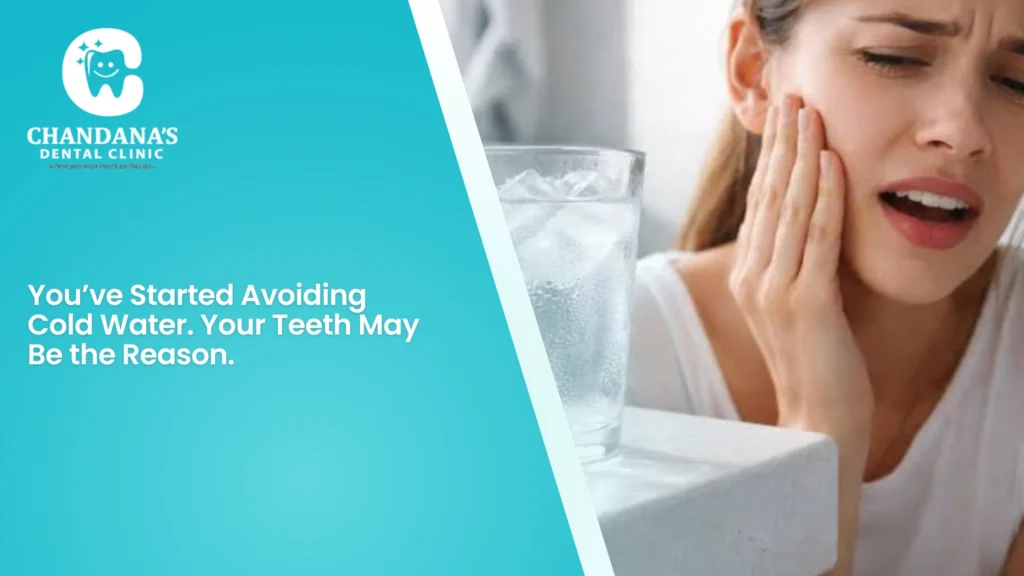
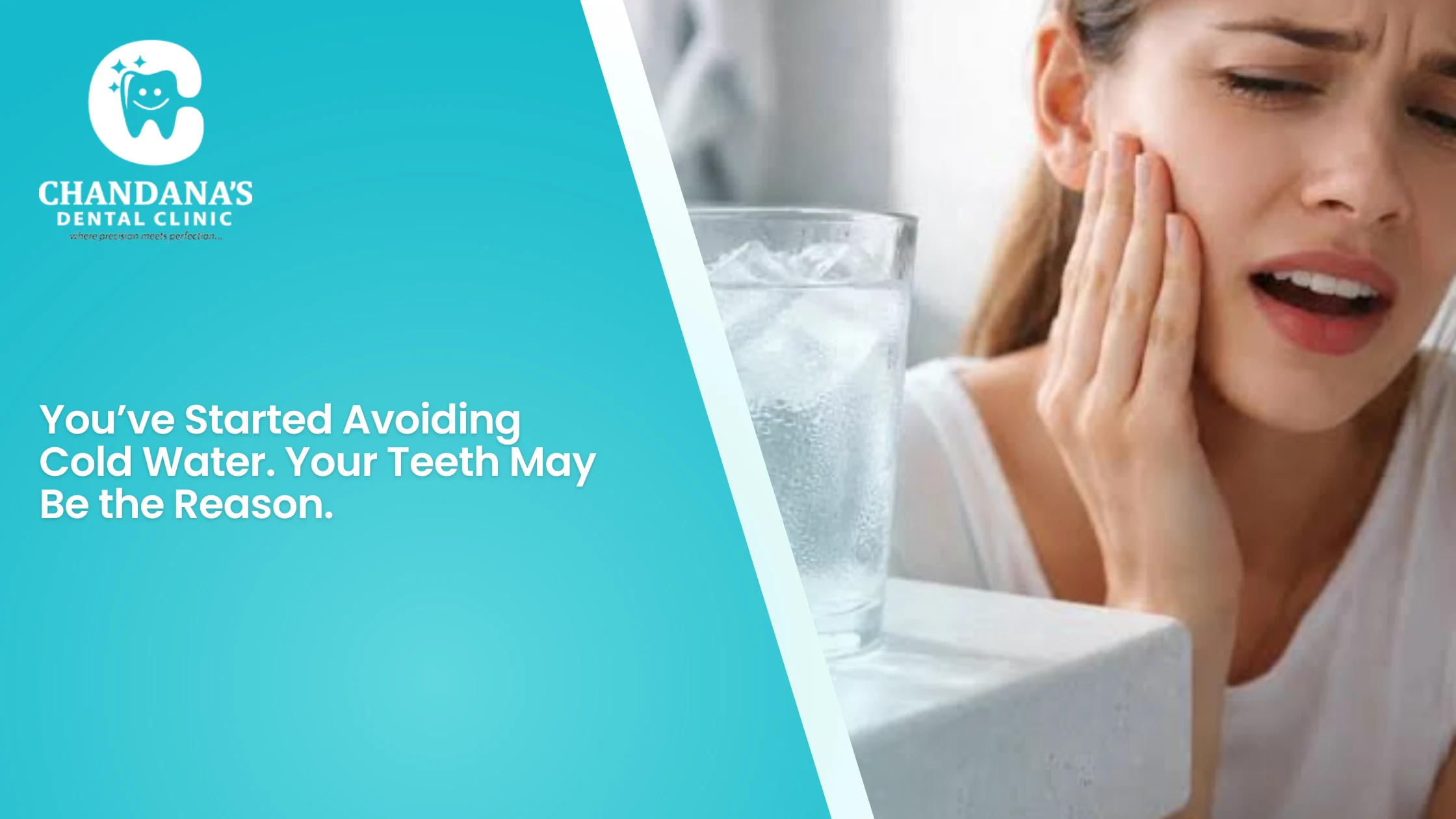
You ask for water without ice.
You wait for your tea to cool.
You take a smaller bite of ice cream—or skip it altogether.
Not because you dislike these things.
Because one uncomfortable sensation has started making the decision for you.
Tooth sensitivity can quietly change everyday habits. When the discomfort lasts only a moment, it is easy to dismiss it.
“It happens sometimes.”
“My teeth are just sensitive.”
“I’ll try another toothpaste.”
But sensitivity describes what you feel. It does not explain why you feel it.
The important question is whether the discomfort comes from exposed dentine, tooth wear, a damaged filling, decay or another problem that needs attention.
What Does Tooth Sensitivity Feel Like?
Sensitivity often feels like a brief, sharp response when something touches a particular tooth or area.
Cold water may trigger it.
So might hot food, something sweet or brushing near an exposed root.
However, not every temperature-related toothache is ordinary sensitivity. A cavity, crack or other dental problem can produce similar symptoms.
The American Dental Association recommends identifying the cause before choosing treatment.
This distinction matters.
A toothpaste that helps exposed dentine cannot repair a cracked tooth.
Why Can a Tooth React to Cold?
The visible part of a healthy tooth is covered by enamel.
Underneath is dentine, which contains tiny channels connected to the inner part of the tooth.
When dentine loses its protective covering, temperature changes and other stimuli can trigger discomfort. An exposed root may also become sensitive because it does not have the same enamel covering as the crown.
The tooth may look fairly normal in the mirror.
The change causing the sensitivity may be much harder to see.
“But I Don’t Have a Visible Cavity.”
That is useful information.
It is not a diagnosis.
Sensitivity can occur without an obvious hole. Equally, an area of decay or a damaged restoration may not be visible when you inspect your own teeth.
You may notice where the pain seems to come from, but identifying its source requires an examination.
This is why a dentist asks more than whether cold water hurts.
They may ask:
- Is one tooth affected or several?
- When did it begin?
- Does the discomfort stop quickly?
- Does biting also hurt?
- Have you recently changed toothpaste or used whitening products?
- Have you noticed grinding or clenching?
These details help guide the assessment. They do not replace it.
Everyday Habits Can Contribute
Sometimes sensitivity develops alongside changes in the tooth surface or gum position.
Forceful brushing, tooth grinding and certain whitening products may contribute. A dentist may recommend gentler brushing, a less abrasive toothpaste or a protective mouth guard when appropriate.
The answer is not to stop cleaning the area.
It is to understand what needs changing.
If every brushing session feels uncomfortable, ask your dentist to check both the tooth and your brushing technique rather than repeatedly experimenting with products.
Acidic Drinks Deserve a Closer Look
You may rarely eat sweets and still expose your teeth to acid.
Soft drinks, some fruit juices and other acidic drinks can contribute to enamel erosion. Acid exposure may also come from conditions such as reflux.
Erosion is different from decay: it involves chemical loss of tooth structure rather than bacterial activity.
Frequent sipping can keep exposing teeth throughout the day. Rinsing with water after acidic food or drink, reducing repeated exposure and avoiding brushing immediately afterwards may help protect tooth surfaces. Persistent reflux should also be discussed with a medical professional.
This does not mean every sensitive tooth has acid erosion.
It means your eating, drinking and health history may be relevant to the examination.
Will Sensitivity Toothpaste Solve It?
It may help in suitable cases.
Desensitising toothpaste can reduce discomfort, but it may need repeated use before an improvement becomes noticeable.
Follow the product instructions and your dentist’s advice.
If symptoms persist, do not assume you simply need a stronger product. The original cause may need a different approach.
There is an important difference between:
“This product has helped.”
And:
“I still cannot drink comfortably, but I keep using it.”
Persistent symptoms deserve reassessment.
What Happens During a Sensitivity Evaluation?
At Chandana’s Dental Clinic, the sensitive teeth treatment page describes checking for exposed roots, enamel wear, cracks and other possible causes.
Your assessment may involve reviewing:
- The affected tooth or teeth
- Gum recession and exposed surfaces
- Existing fillings
- Signs of wear or damage
- Brushing and dietary habits
- Possible grinding
- Whether an X-ray is needed
The aim is not simply to confirm that your teeth react to cold.
It is to decide what that reaction means.
Treatment Depends on the Cause
The clinic lists fluoride applications, protective bonding, gum-recession care and night guards among its approaches to sensitivity.
These are not interchangeable treatments.
A protective coating may be considered for an exposed surface. A night guard may be relevant when grinding contributes. Another dental problem may require treatment directed at that problem.
Not everyone needs a procedure.
Not everyone will improve with toothpaste alone.
A clear diagnosis helps avoid both unnecessary treatment and repeated attempts that do not address the cause.
Common Misconceptions About Sensitive Teeth
“Sensitive teeth always mean weak enamel.”
Exposed dentine is one possibility, but decay, cracks and damaged fillings can also cause similar discomfort.
“If the pain disappears quickly, I can ignore it.”
A short episode does not tell you why it happened. Repeated symptoms still deserve attention.
“Brushing harder will strengthen the area.”
More force is not better care. Gentle cleaning is preferable to scrubbing.
“Every sensitive tooth needs root canal treatment.”
Sensitivity alone does not establish a need for root canal treatment. The diagnosis determines the next step.
When Should You Arrange an Appointment?
Arrange an evaluation when sensitivity keeps returning, changes your eating habits or does not improve with appropriate home care.
Seek prompt dental advice for pain that persists, pain when biting, a bad taste, fever or swelling.
Swelling affecting breathing, swallowing or speaking requires emergency medical care.
You do not need to wait until the discomfort becomes severe to ask what is causing it.
Practical Takeaways
✔ Tooth sensitivity is a symptom, not a complete diagnosis.
✔ Similar discomfort can come from different dental problems.
✔ Sensitivity toothpaste may help, but it cannot treat every cause.
✔ Gentle brushing and attention to acid exposure can support daily care.
✔ Persistent or changing symptoms should be professionally assessed.
Conclusion
Avoiding cold water may make today’s discomfort easier to manage.
But it does not explain why the discomfort began.
You should not have to keep adjusting everyday meals around a tooth without understanding what is happening.
For patients in Kompally and Petbasheerabad, Chandana’s Dental Clinic, led by Dr. Chandana Reddy, offers assessment and personalised care for sensitive teeth.
The next step need not be a major procedure.
It can simply be finding out what your tooth needs.
FAQs
1. Why does cold water hurt only one tooth?
A localised problem may be responsible. The affected tooth needs examination rather than assuming all your teeth are sensitive.
2. How quickly does sensitive toothpaste work?
Some products require repeated use. Follow the instructions, and seek advice if symptoms continue rather than expecting immediate relief.
3. Can sensitivity happen without a cavity?
Yes. Exposed roots and tooth-surface wear are other possible causes.
4. Should I stop brushing the sensitive area?
Avoid abandoning oral hygiene. Clean gently and ask your dentist for advice if brushing remains uncomfortable.
5. Can whitening products make teeth sensitive?
They can. Tell your dentist which product you used and when symptoms started.
6. Is drinking room-temperature water a treatment?
It may avoid a trigger temporarily, but it does not identify or treat the cause.
7. What should I mention at my appointment?
Describe the location, triggers, duration and any recent changes in dental products or habits. Mention pain when biting or swelling as well.
8. Does sensitivity always require a dental procedure?
No. Recommendations depend on the examination and the underlying cause.