You feel it while eating.
One tooth seems to move slightly.
You check it with your tongue.
Then you check it again.
Maybe you imagined it.
Maybe it will become firm on its own.
So you decide to wait.
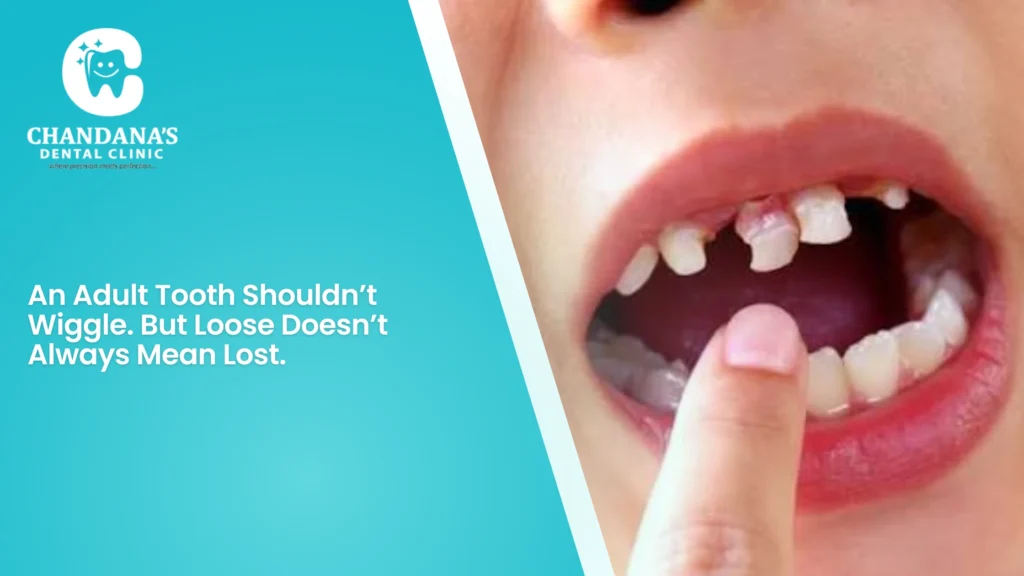
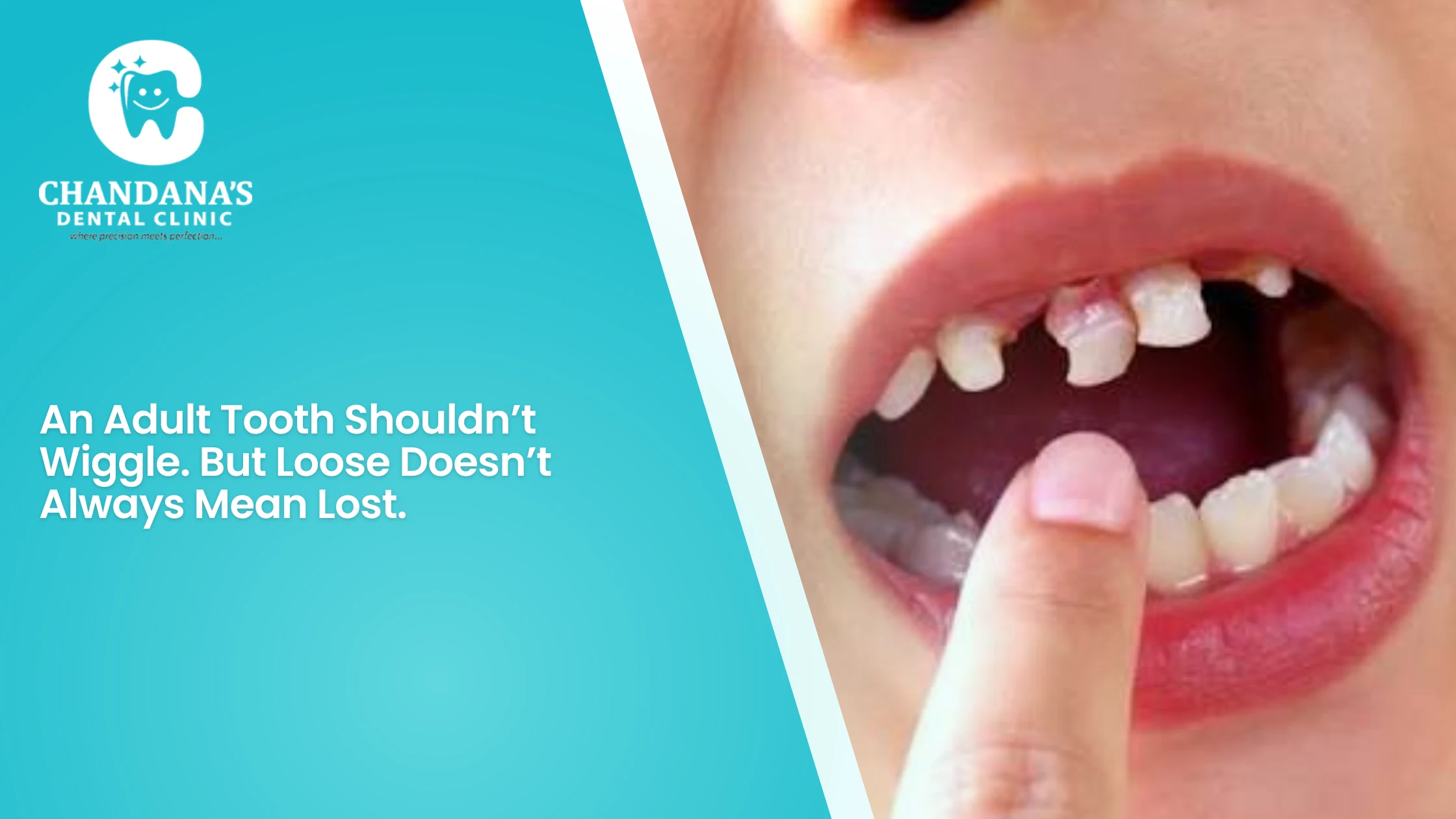
A loose baby tooth is expected.
A loose adult tooth is not.
But noticing movement does not automatically mean the tooth must be removed. In some situations, early diagnosis and appropriate periodontal care may help stabilise the tooth and protect the surrounding tissues.
The important word is early.
Teeth Are Not Held in Place by the Gums Alone
A tooth may look as though it simply sits inside the gum.
In reality, it is supported by a complex foundation consisting of:
- Jawbone
- Periodontal ligament
- Gum tissue
- Cementum covering the tooth root
These structures work together to keep the tooth stable while absorbing the forces created during biting and chewing.
If infection, inflammation, injury, or excessive pressure damages this support system, the tooth may begin to move.
The movement is the symptom.
The real question is what is happening to the foundation underneath.
The Most Common Cause: Advanced Gum Disease
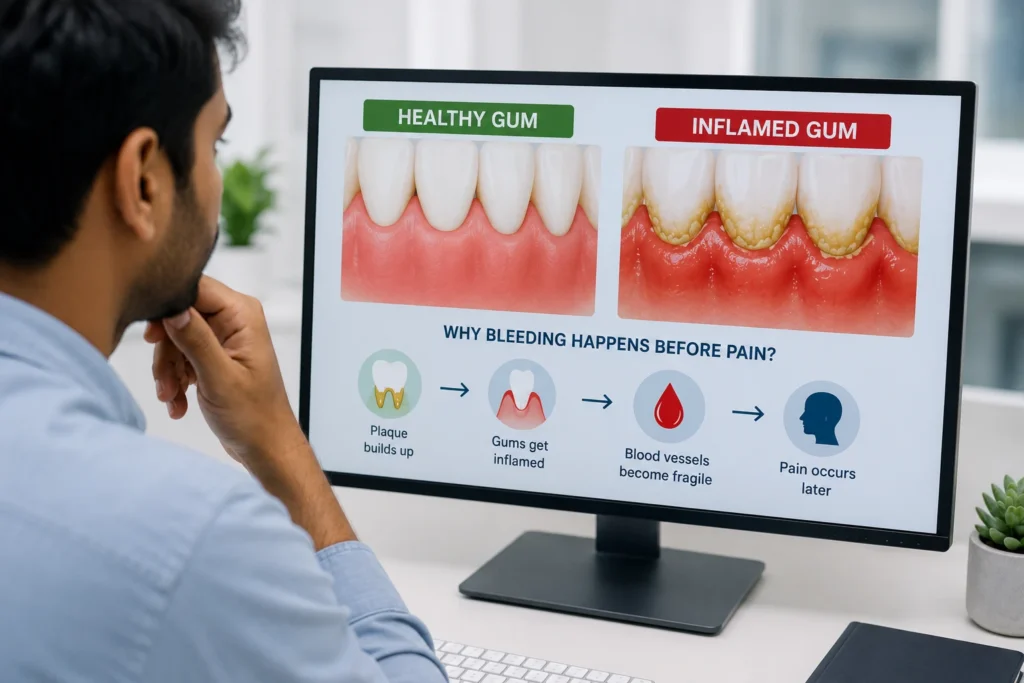
Gum disease often begins with plaque and bacterial biofilm accumulating around the gumline.
At first, the gums may become red, swollen, or bleed during brushing. This early stage is called gingivitis.
If the inflammation is not controlled, it may progress deeper.
The gums can begin to separate from the teeth, creating periodontal pockets. Bacteria may then affect the ligament and bone supporting the tooth.
As bone support decreases, the tooth may feel:
- Slightly mobile
- Different while biting
- Tender when chewing
- Longer than neighbouring teeth
- Surrounded by receding gums
- Separated by newly developing gaps
The National Institute of Dental and Craniofacial Research explains that untreated periodontal disease can affect the bone supporting the teeth and may eventually cause teeth to become loose. NIDCR guidance
“But the Tooth Doesn’t Hurt.”
That does not rule out a problem.
Gum disease can progress quietly.
There may be no dramatic toothache. Instead, you may experience subtle changes over months or years:
- Occasional bleeding
- Persistent bad breath
- Food getting trapped
- Gum recession
- A change in the way your teeth meet
- Slight movement while chewing
- Spaces appearing between teeth
Pain is not the only measure of seriousness.
A tooth can lose supporting bone without producing the type of pain people normally associate with dental disease.
Can Teeth Grinding Make a Tooth Loose?
Yes, excessive biting forces may contribute to tooth mobility.
Clenching or grinding—also known as bruxism—can place repeated pressure on the teeth and their supporting tissues.
You may not realise you are doing it, particularly if it happens during sleep.
Possible signs include:
- Jaw tightness in the morning
- Facial muscle fatigue
- Headaches
- Flattened or worn teeth
- Chipped enamel
- Tooth sensitivity
- Pain while biting
- Cracks in teeth or restorations
Grinding may be especially damaging when a tooth has already lost some periodontal support.
Treating the gums without addressing excessive biting pressure may leave part of the problem unresolved.
What Else Can Cause an Adult Tooth to Move?
Not every loose tooth is caused by gum disease.
Other possibilities include:
- An injury to the mouth
- Biting unexpectedly on something hard
- A cracked tooth or root
- Infection around the tooth
- Excessive orthodontic forces
- Bone loss around a dental implant
- Changes in the bite
- Long-term clenching or grinding
This is why trying to diagnose the cause at home can be misleading.
Two loose teeth may feel similar but require completely different treatment.
Can a Loose Tooth Tighten Again?
Sometimes—but it depends on why it became loose and how much support remains.
A tooth affected by temporary trauma or inflammation may become more stable after the cause is treated.
A tooth with periodontal disease may sometimes be maintained through:
- Professional biofilm and tartar removal
- Deep periodontal cleaning
- Improved home care
- Management of gum infection
- Laser periodontal treatment where appropriate
- Bite adjustment
- A protective night guard
- Splinting to neighbouring teeth
- Regular periodontal maintenance
However, no dentist can decide whether a tooth is saveable based only on visible movement.
The tooth, gums, bone levels, bite, and overall oral condition must be examined.
What Is Dental Splinting?
Splinting involves connecting a mobile tooth to one or more stable neighbouring teeth.
This allows the teeth to share biting forces and may improve comfort while the underlying condition is being treated.
But a splint is not a cure by itself.
If gum disease, infection, or grinding caused the mobility, that cause must still be managed. Otherwise, the supporting tissues may continue to deteriorate beneath the splint.
Think of it as supporting a weakened wall.
The support may help—but the damaged foundation still needs repair.
Does a Loose Tooth Always Need Extraction?
No.
Extraction may be recommended when a tooth has extremely poor support, severe infection, an untreatable fracture, or a prognosis that makes predictable maintenance unlikely.
But mobility alone does not automatically decide the outcome.
A periodontal assessment may show that the tooth still has enough support to be treated and monitored.
At Chandana’s Dental Clinic, the focus is on preserving natural teeth whenever clinically possible. Dr. Chandana Reddy evaluates the gum condition, remaining bone support, tooth mobility, bite forces, and long-term maintainability before discussing appropriate options.
If a tooth cannot be predictably preserved, replacement options such as dental implants, bridges, or dentures can then be considered according to the patient’s condition.
What Happens During a Loose-Tooth Evaluation?
The dentist or periodontist may assess:
- How much the tooth moves
- Whether movement is horizontal or vertical
- Gum inflammation and bleeding
- Periodontal pocket depth
- Gum recession
- Bone support around the tooth
- Tooth decay or fractures
- Signs of infection
- The way your teeth meet
- Evidence of clenching or grinding
Dental X-rays may be needed to evaluate bone levels and areas that cannot be seen during a visual examination.
Treatment is then planned according to the cause—not simply according to the symptom.
What Should You Do Until Your Appointment?
If you notice an adult tooth moving:
- Avoid repeatedly testing it with your tongue or fingers
- Do not try to push it back into position
- Avoid biting hard foods with that tooth
- Continue cleaning the area gently
- Do not stop brushing because the gums bleed
- Arrange a dental examination promptly
- Seek urgent care if the mobility follows an injury
Repeatedly moving the tooth to “check” it can place additional strain on already weakened tissues.
Leave the testing to the dentist.
Common Myths About Loose Adult Teeth
Myth 1: A loose tooth will become firm if I stop touching it
Avoiding unnecessary movement is sensible, but the underlying cause still requires evaluation.
Myth 2: Loose teeth are only a problem for older adults
Gum disease, injury, grinding, infection, and other conditions can affect adults at different ages.
Myth 3: If there is no pain, there is no urgency
Periodontal bone loss may develop without significant pain.
Myth 4: Extraction is the only treatment
Some teeth can be stabilised or maintained after treating gum disease, infection, trauma, or excessive bite pressure.
Myth 5: Mouthwash can tighten a loose tooth
Mouthwash may support oral hygiene in selected cases, but it cannot rebuild lost bone or diagnose the reason for mobility.
Signs That Should Not Be Ignored
Book a dental or periodontal evaluation if you notice:
- Movement in any adult tooth
- Gums pulling away from the teeth
- New gaps between teeth
- Bleeding or swollen gums
- Pus around the gumline
- Persistent bad breath
- Pain or pressure while biting
- A change in your bite
- A tooth appearing longer
- Difficulty chewing comfortably
Seek prompt attention when a loose tooth follows a fall, sports injury, accident, or direct impact.
Prevention Begins Before Mobility Appears
A tooth usually does not become loose overnight unless there has been an injury.
In many periodontal cases, smaller warning signs appear first.
These may include bleeding, inflammation, tartar accumulation, recession, or persistent bad breath.
Preventive care can help identify these changes before the tooth loses significant support.
Depending on individual risk, prevention may include:
- Effective brushing and interdental cleaning
- Professional plaque and tartar removal
- Periodontal examinations
- Guided Biofilm Therapy for suitable patients
- Diabetes management
- Avoiding smoking and tobacco
- Management of teeth grinding
- Regular maintenance after gum treatment
The objective is not simply to keep teeth looking clean.
It is to protect the foundation that keeps them in place.
Practical Takeaways
✔ A loose adult tooth is not normal and should be evaluated.
✔ Gum disease is a common cause, but injury, infection, cracks, and grinding may also contribute.
✔ The absence of pain does not guarantee healthy bone support.
✔ A loose tooth does not automatically require extraction.
✔ Early periodontal care may improve the possibility of stabilising and preserving a tooth.
✔ Treatment must address the cause—not merely the movement.
Conclusion
A loose tooth can create an immediate fear:
“Am I going to lose it?”
That question is understandable.
But it cannot be answered accurately by checking the tooth in the mirror or waiting to see whether it gets worse.
Some mobile teeth can be treated and maintained. Others may have lost too much support for predictable preservation. The difference can only be determined through a proper dental and periodontal examination.
The earlier the cause is identified, the more options may be available.
If you live in Kompally, Suchitra, Petbasheerabad, Jeedimetla, Alwal, Medchal, Bowenpally, Kandlakoya, or another part of North Hyderabad, Chandana’s Dental Clinic provides specialist periodontal evaluation and personalised treatment for gum disease and loose teeth.
Your tooth may be the part that moves.
But it is the foundation underneath that needs attention.
FAQs
Is it normal for an adult tooth to move slightly?
Adult teeth have a tiny amount of natural physiological movement, but noticeable looseness or a recent change should be evaluated.
Can gum disease make teeth loose?
Yes. Advanced gum disease can damage the gum tissue, periodontal ligament, and bone supporting the teeth.
Can a loose tooth become firm after gum treatment?
Some teeth may become more stable after inflammation, infection, and excessive biting forces are controlled. The outcome depends on the remaining bone support and the cause of mobility.
Does every loose tooth need to be removed?
No. The decision depends on bone support, infection, mobility, fractures, bite forces, and whether the tooth can be maintained predictably.
Can a dentist splint a loose tooth?
In suitable cases, a mobile tooth may be connected to neighbouring teeth for additional stability. The underlying cause must also be treated.
Can teeth grinding cause looseness?
Excessive clenching or grinding can strain teeth and their supporting structures, particularly when periodontal support is already reduced.
Should I stop brushing around a loose tooth?
No. Continue cleaning gently unless your dentist advises otherwise. Avoiding the area may allow more plaque to accumulate.
Which specialist treats loose teeth caused by gum disease?
A periodontist specialises in diagnosing and treating conditions affecting the gums, periodontal ligament, and bone supporting the teeth.