“I think I’m brushing too hard.”
That’s probably the most common explanation people give when their gums bleed.
So they do one of two things.
They brush more gently.
Or…
They stop brushing the area altogether.
Ironically, both decisions can make the problem worse.
Healthy gums generally do not bleed during routine brushing.
If your gums bleed repeatedly, your toothbrush may not be the cause.
It may simply be exposing inflammation that has already been developing beneath the surface.
Bleeding Is Not the Disease. It’s the Warning Sign.
Imagine washing your hands.
If they started bleeding every time you used soap, you wouldn’t blame the soap.
You’d ask,
“Why is my skin damaged?”
Your gums deserve the same logic.
Bleeding is usually a symptom.
The important question is:
Why are the gums inflamed in the first place?
What Causes Bleeding Gums?
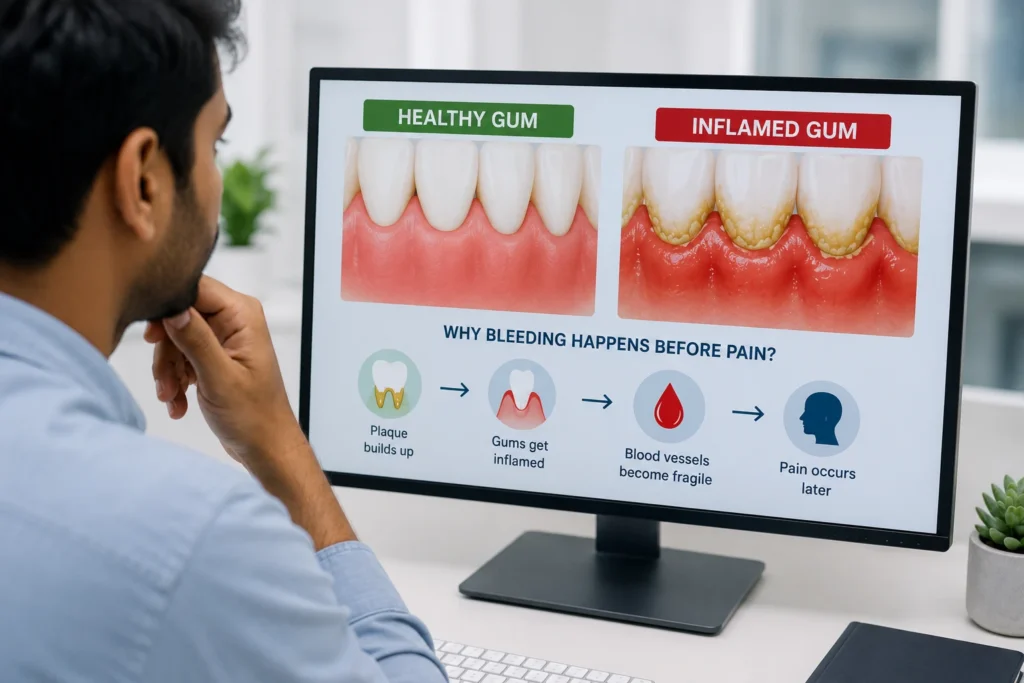
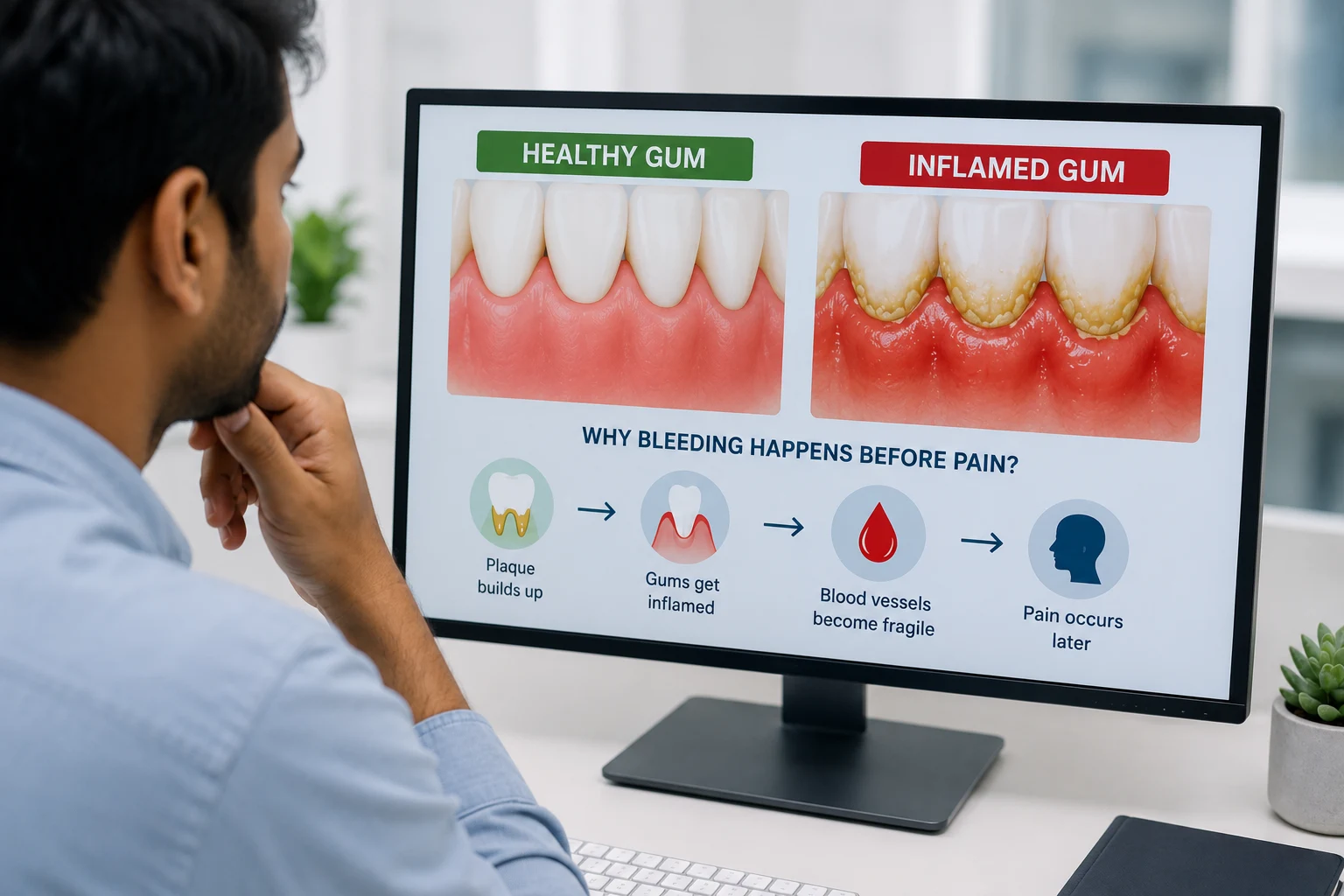
The most common cause is the gradual build-up of dental plaque and biofilm along the gumline.
These bacteria trigger inflammation.
Initially, this stage is called gingivitis.
At this point:
- gums may look slightly swollen
- brushing may cause bleeding
- bad breath may develop
- pain is often absent
This explains why many people ignore it.
Nothing hurts.
So nothing seems urgent.
The Problem With Waiting
One of the biggest misconceptions is:
“If it doesn’t hurt, it isn’t serious.”
Unfortunately, gum disease often progresses quietly.
If plaque and inflammation continue for long periods, the condition may advance beyond gingivitis.
In some people, deeper supporting tissues around the teeth may also become affected.
This stage is called periodontitis.
Unlike gingivitis, advanced gum disease may involve:
- gum recession
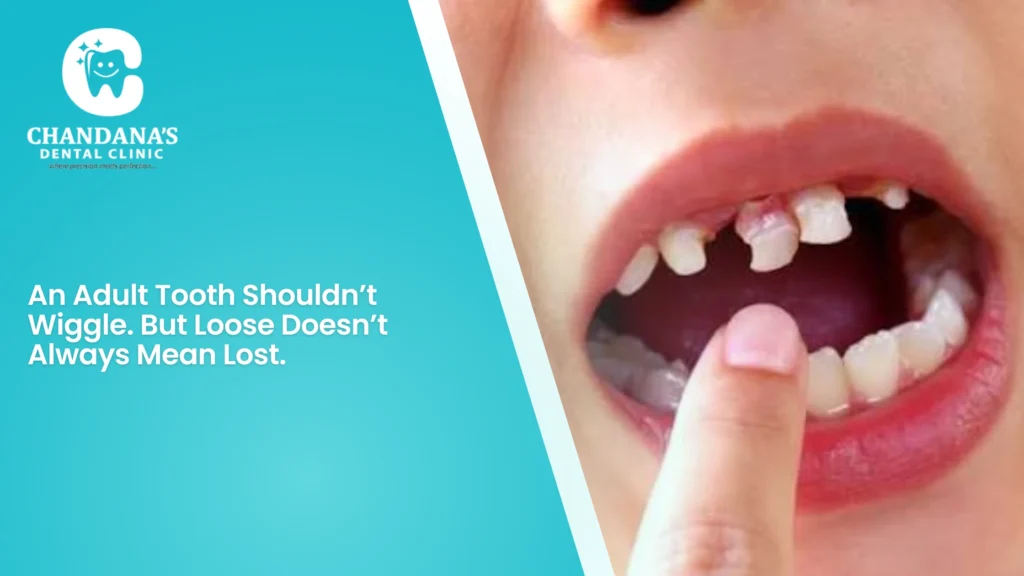
- loose teeth
- bone loss around teeth
- spaces developing between teeth
- difficulty chewing
The encouraging part?
Early intervention is usually much simpler than treating advanced disease.
Why Do Some People Develop Gum Disease Faster?
Not everyone’s gums respond the same way.
Certain factors increase risk, including:
- Smoking
- Diabetes
- Poor plaque control
- Hormonal changes
- Dry mouth
- Certain medications
- Family history
For example, people living with diabetes may have a two-way relationship between gum health and blood sugar control, making regular dental care particularly important.
“My Gums Bleed Only Sometimes.”
That’s Still Worth Paying Attention To.
Many patients assume occasional bleeding doesn’t matter.
But inflammation doesn’t need to be constant to deserve evaluation.
If bleeding keeps returning,
your gums are repeatedly trying to tell you something.
Ignoring that message doesn’t make it disappear.
Can Mouthwash Solve the Problem?
Mouthwash can support oral hygiene in selected situations.
It cannot remove hardened tartar.
It cannot eliminate established plaque deposits beneath the gums.
And it cannot replace professional diagnosis.
Treating gum disease starts with identifying why the inflammation exists.
How Dentists Treat Bleeding Gums

Treatment depends entirely on the cause.
After examining your gums, your dentist may recommend:
- professional plaque removal
- tartar removal
- oral hygiene guidance
- monitoring gum health
- periodontal treatment where required
For suitable patients, modern approaches such as Guided Biofilm Therapy (GBT) help identify and remove biofilm using minimally invasive techniques as part of comprehensive preventive care.
Common Myths About Bleeding Gums
Myth 1
“I should stop brushing where it bleeds.”
Actually, plaque often accumulates most in the areas people avoid brushing.
Myth 2
“Bleeding gums are normal.”
Healthy gums generally should not bleed during routine brushing.
Myth 3
“Mouthwash will fix everything.”
Mouthwash supports oral hygiene.
It doesn’t remove tartar or replace professional treatment.
Myth 4
“If my teeth don’t hurt, my gums must be healthy.”
Pain is often a late sign.
Inflammation usually appears much earlier.
When Should You Visit a Dentist?
Book an evaluation if you notice:
✔ bleeding while brushing
✔ bleeding while flossing
✔ swollen gums
✔ persistent bad breath
✔ gum recession
✔ loose teeth
✔ pus around the gums
Early treatment is almost always easier than delayed treatment.
Practical Takeaways
✔ Bleeding gums are a symptom—not a normal part of brushing.
✔ Gum disease often develops without pain.
✔ Plaque and biofilm are the most common underlying causes.
✔ Professional evaluation helps determine the stage of gum disease and the most appropriate treatment.
✔ Preventive dental visits reduce the likelihood of more complex treatment later.
Conclusion
Your gums are remarkably good at giving early warnings.
The problem is that many of us wait until those warnings become emergencies.
Bleeding during brushing is not something to panic about—but it is something to respect.
A simple examination today may prevent far more complicated treatment in the future.
For people living in Kompally, Suchitra, Jeedimetla, Alwal, Medchal, Kandlakoya and other parts of North Hyderabad, regular periodontal evaluations and preventive dental care can play an important role in maintaining healthy gums for years to come.
FAQs
1. Are bleeding gums normal?
No. Healthy gums generally do not bleed during routine brushing or flossing.
2. Can brushing too hard cause bleeding?
Very aggressive brushing may irritate gums, but repeated bleeding often indicates underlying inflammation that deserves evaluation.
3. Will bleeding gums heal on their own?
Not always. If plaque and tartar remain, the inflammation usually persists.
4. Is gum disease painful?
Early gum disease often causes little or no pain.
5. Can diabetes affect gum health?
Yes. Diabetes and gum disease can influence each other, making good oral hygiene and regular dental care especially important.
6. What is gingivitis?
Gingivitis is the early stage of gum inflammation caused primarily by plaque accumulation. It is generally reversible with appropriate care.
7. Can GBT help with gum health?
GBT is a modern approach to biofilm management that may be recommended for suitable patients as part of preventive and periodontal care.
8. Which dentist treats gum disease?
A dentist will evaluate gum health and, when needed, treatment may involve a periodontist—a dentist specialising in diseases affecting the gums and supporting structures of the teeth.